

The Federal Reserve is signaling a rare divide over whether to cut interest rates in the coming month—a moment that carries significant implications for the national economy. But for commercial real estate in New York City, the stakes are even higher.
The dramatic shift in sentiment toward a potential quarter-point rate cut, now priced by markets at nearly 85% probability, comes at a moment when inflation remains stubbornly above target and job growth shows signs of slowing. This push-and-pull dynamic—between managing inflation and supporting employment—creates uncertainty at a national scale.
For the New York City commercial real estate market, which thrives on access to capital, predictable financing costs, and steady business expansion, understanding the implications of this Federal Reserve split is essential.
1. Why the Fed’s Division Matters for NYC CRE
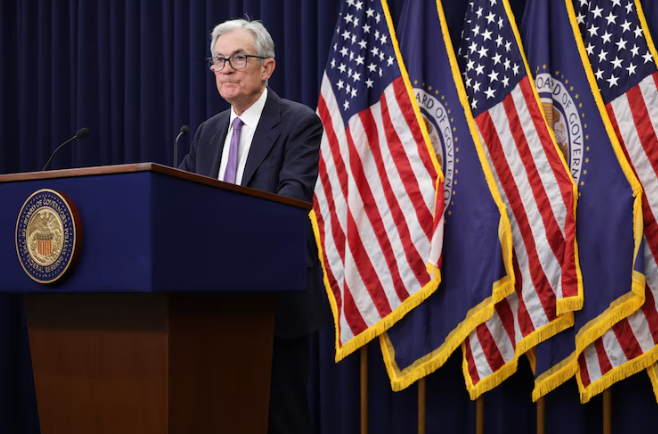
Fed Chair Jerome Powell faces a dilemma:
- Holding rates steady may help curb inflation but risks further cooling the job market.
- Cutting rates may stimulate hiring and business activity but risks renewed inflationary pressure.
This debate directly influences the cost of capital that underpins nearly every commercial real estate transaction—from refinancing office towers to funding multifamily developments.
New York City’s Sensitivity to Rates
Few markets in the country are as leveraged, capital-intensive, and valuation-driven as NYC. Even a 25-basis-point adjustment can ripple through:
- Cap rates
- Lender appetite
- Debt-service coverage ratios
- Investor underwriting assumptions
- Transaction volume and bid-ask spreads
In a city where financing costs often determine whether a deal pencils, the Fed’s indecision becomes a central factor in property strategy.
2. Momentum Toward a Rate Cut: What’s Driving It
Recent public comments by influential Fed officials—notably John Williams of the New York Fed and Mary Daly of the San Francisco Fed, both historically aligned with Powell—have pushed momentum toward a cut.
Their openness to “further adjustment in the near term” is noteworthy because central-bank language rarely shifts without intention.
Translating This to Commercial Real Estate Investors
Growing confidence around a rate cut often leads to:
- Renewed lender competition, even ahead of formal policy changes
- Greater willingness to extend interest-only periods
- Expanding loan-to-value ratios
- Increased CMBS and private debt market activity
- More optimistic investor sentiment
This can thaw deal flow in a market like NYC, where many sellers and buyers have remained gridlocked due to financing costs.
3. Impact on Key NYC CRE Sectors
Office
A rate cut may provide relief for owners facing refinancing risk or value erosion. Lower borrowing costs can ease debt-service pressure, create opportunities for recapitalization, and attract investors chasing stabilized assets in prime Manhattan locations.
Multifamily
While fundamentals remain strong, high interest rates have constrained acquisitions and refinancing. A rate cut helps:
- Reduce the cost of bridge and permanent loans
- Improve returns for value-add strategies
- Support developers who paused projects due to construction financing costs
Industrial & Logistics
Demand remains resilient, but NYC’s industrial deals have slowed due to elevated capital costs. Lower rates could re-ignite investor appetite, particularly for last-mile and redevelopment opportunities in Brooklyn, Queens, and the Bronx.
Retail
Consumer spending remains sensitive to broader economic conditions. A rate cut that supports employment could translate into healthier foot traffic and tenant stability—positive for retail landlords throughout NYC corridors.
4. How a Rate Cut Would Affect NYC Investors and Borrowers
A quarter-point reduction in the Fed’s benchmark rate, lowering it to the 3.5%–3.75% range, may seem incremental, but NYC CRE magnifies the impact.
Borrowers Stand to Benefit
- Refinancing becomes less expensive
- Floating-rate debt resets lower
- Development deals may again become feasible
- Borrower confidence improves, reducing transaction friction
Sellers Benefit from Improved Capital Access
- Lower rates expand the buyer pool
- Cap rate compression may resume in certain assets
- Properties that previously “didn’t pencil” become viable again
Investors Must Adjust Strategies
While lower rates are generally positive, they may also:
- Renew competition for deals
- Push buyers to move quickly before prices adjust
- Tighten spreads between high-quality and secondary assets
For disciplined NYC investors, the coming months offer a rare moment to position ahead of competition.
5. What LandAir Property Advisors Recommends Right Now
As uncertainty persists, commercial real estate owners and investors should prepare for multiple scenarios. LandAir advises clients to:
1. Reassess debt maturities
Identify refinancing windows where a potential rate cut could dramatically improve economics.
2. Re-underwrite acquisition targets
A quarter-point shift could turn marginal deals into compelling ones.
3. Monitor lender behavior
Banks and private lenders often adjust pricing ahead of Fed action—this is a moment of opportunity.
4. Evaluate recapitalization options
Owners burdened by higher rates may find improved terms in the next 60–120 days.
5. Consider opportunistic acquisitions
If rates fall, competition will increase quickly—early movers gain advantage.
Conclusion: A Pivotal Moment for NYC Commercial Real Estate
The Federal Reserve’s division over interest rates signals a rare period of uncertainty—but also one of potential opportunity. For New York City commercial real estate, where capital cost shapes every decision, the coming Fed meeting could be a turning point.
LandAir Property Advisors continues to navigate these dynamics daily, helping clients capitalize on shifts in monetary policy and market sentiment. Whether the rate cut materializes or the Fed holds steady, NYC’s commercial real estate market is entering a new phase—and preparation is key.
Adapted from ABC News: “The Fed is divided over cutting interest rates. Here's why that matters,” by Max Zahn (Nov. 25, 2025)